
Ask anyone who has moved recently which room took the longest and they will say the kitchen. It is not close.
Kitchens are full of things that are heavy, fragile, oddly shaped, or all three at once. There is no standard size to anything. Half the items are breakable and the other half are sharp. And unlike a bedroom, you cannot really pack it early, because you have to keep eating.
Here is how to get through it without a box of broken glasses waiting for you on the other end.
Start two weeks out, not two days
The kitchen is the one room where starting early actually works, as long as you start with the right things.
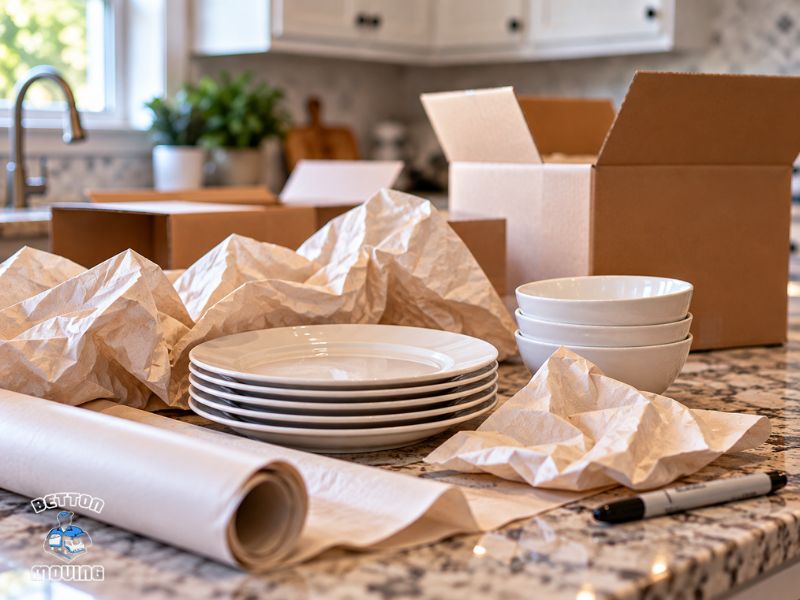
Two weeks before the move, pack everything you are not going to use. Serving platters, the good china, the waffle iron, the second set of mixing bowls, anything seasonal. Most kitchens are carrying a lot of equipment that only comes out a few times a year, and all of it can be boxed before you touch a single daily item.
That leaves you with what you actually cook with, which is usually one pot, one pan, a few plates, and the coffee maker. Pack that on the last day.
Use small boxes, and stop filling them
Dishes are heavy. A medium box of plates is heavier than it looks, and a large box of plates is a box that splits down the seam while somebody is carrying it.
Small boxes for anything dense. Dishes, canned goods, small appliances, cast iron. Medium and large boxes for the light bulky things like plastic storage containers, mixing bowls, and dish towels.
A good gut check: if you cannot comfortably lift it off the counter with both hands, take something out.
Plates go on their side, not stacked flat
This is the single most useful thing in this article.
Stacked plates break because all the weight presses down on the bottom one, and any jolt in transit sends it straight through the stack. Plates standing on edge, like records in a crate, distribute force along the strongest part of the plate instead.
Wrap each plate individually in packing paper, then stand them upright in the box with a layer of crumpled paper underneath and between groups. It takes an extra ten minutes for an entire cabinet and it is the difference between opening a box of dishes and opening a box of pieces.
Glassware needs more paper than you think
Each glass gets wrapped on its own. Push a piece of crumpled paper into the inside of the glass first, then roll it in a sheet from the corner, tucking the ends in as you go.
Stemware is more fragile at the stem than at the bowl, so wrap the stem separately before you roll the whole piece.
Glasses go in the top layer of the box, never the bottom, and never under anything heavier than another glass. A cell divider insert is worth buying if you have a lot of them.
The things people forget
Knives. Wrap the blade in a kitchen towel, tape it closed, and label it. Somebody is going to reach into that box without looking.
Spices and pantry. Tape the lids of anything that could open. Olive oil in a box of linens is a bad afternoon. Toss anything expired instead of paying to move it.
The junk drawer. Dump the whole thing into a gallon bag, seal it, and deal with it later. Do not sort it now. Nobody has ever successfully sorted a junk drawer on moving week.
The refrigerator and freezer. Start running it down two weeks out. Anything left on moving day either goes in a cooler or goes in the trash, and the fridge needs to be defrosted and dried the night before.
Small appliances. If you still have the original box, use it. If not, pad the cord separately so it does not scratch the finish.
Label like you will be tired, because you will be
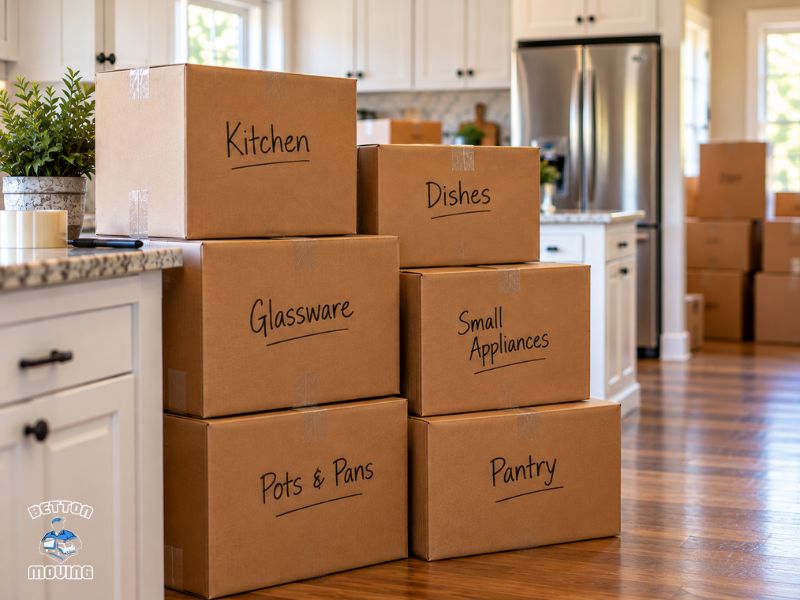
Write what is in the box and which room it belongs in, on the side of the box rather than the top, because boxes get stacked.
Mark anything fragile on at least two sides. And pack one box labeled “open first” with the coffee maker, a few plates, utensils, dish soap, a towel, and scissors. The first night in a new house is miserable without it.
When it makes sense to let someone else do it
Packing a kitchen well takes most of a day if you are being careful, and it is the room most likely to produce damage if it is done in a hurry the night before.
There is one other thing worth knowing. Most moving companies cannot cover damage to boxes you packed yourself, because there is no way to verify what went in or how it was wrapped. If you have a kitchen full of things you would be upset to lose, that matters.
We have been packing and moving Houston kitchens since 1985. We can pack the whole house, or just the rooms you would rather not deal with, which for most people is the kitchen. Call (281) 531-6683 and we will talk through what makes sense.
Common questions about packing a kitchen
How many boxes do I need for a kitchen?
Most kitchens take somewhere between 10 and 20 boxes, weighted toward small ones. A heavily stocked kitchen with a lot of glassware and small appliances can run higher. It is better to have a few extra than to overfill the ones you have.
Can I use newspaper to wrap dishes?
You can, but the ink transfers and you will be washing everything on the other end. Unprinted packing paper costs very little and saves you a full afternoon at the sink.
How far in advance should I pack my kitchen?
Start two weeks out with everything you do not use daily, and leave your everyday items for the last day. That way the room gets done gradually instead of all at once the night before.
Should I pack food?
Pantry items that are sealed and unopened travel fine for a local move. Run down the fridge and freezer in the two weeks before instead of trying to transport cold food. For a long distance move, most of the pantry is not worth the weight.
Do movers pack the kitchen for you?
Yes, packing is a separate service from the move itself and you can book it for the whole house or just certain rooms. The kitchen is the most common room people hand off.